The Visible Man

The Visible Man

Chuck Klosterman

Nonfiction

New York Times bestselling author of Sex, Drugs, and Cocoa Puffs and Downtown Owl, “the Ethicist” of the New York Times Magazine, Chuck Klosterman returns to fiction with his second novel—an imaginative page-turner about a therapist and her unusual patient, a man who can render himself invisible. Therapist Victoria Vick is contacted by a cryptic, unlikable man who insists his situation is unique and unfathomable. As he slowly reveals himself, Vick becomes convinced that he suffers from a complex set of delusions: Y__, as she refers to him, claims to be a scientist who has stolen cloaking technology from an aborted government project in order to render himself nearly invisible. He says he uses this ability to observe random individuals within their daily lives, usually when they are alone and vulnerable. Unsure of his motives or honesty, Vick becomes obsessed with her patient and the disclosure of his increasingly bizarre and disturbing tales. Over time, it threatens her career, her marriage, and her own identity. Interspersed with notes, correspondence, and transcriptions that catalog a relationship based on curiosity and fear, The Visible Man touches on all of Chuck Klosterman’s favorite themes—the consequence of culture, the influence of media, the complexity of voyeurism, and the existential contradiction of normalcy. Is this comedy, criticism, or horror? Not even Y__ seems to know for sure.
Read online
  • 868
Eating the Dinosaur

Eating the Dinosaur

Chuck Klosterman

Nonfiction

Chuck Klosterman has chronicled rock music, film, and sports for almost fifteen years. He's covered extreme metal, extreme nostalgia, disposable art, disposable heroes, life on the road, life through the television, urban uncertainty and small-town weirdness. Through a variety of mediums and with a multitude of motives, he's written about everything he can think of (and a lot that he's forgotten). The world keeps accelerating, but the pop ideas keep coming. In Eating the Dinosaur, Klosterman is more entertaining and incisive than ever. Whether he's dissecting the boredom of voyeurism, the reason why music fans inevitably hate their favorite band's latest album, or why we love watching can't-miss superstars fail spectacularly, Klosterman remains obsessed with the relationship between expectation, reality, and living history. It's amateur anthropology for the present tense, and sometimes it's incredibly funny.
Read online
  • 680
Chuck Klosterman X

Chuck Klosterman X

Chuck Klosterman

Nonfiction

New York Times-bestselling author and cultural critic Chuck Klosterman compiles and contextualizes the best of his articles and essays from the past decade.Chuck Klosterman has created an incomparable body of work in books, magazines, newspapers, and on the Web. His writing spans the realms of culture and sports, while also addressing interpersonal issues, social quandaries and ethical boundaries. Klosterman has written nine previous books, helped found and establish Grantland, served as the New York Times Magazine Ethicist, and worked on film and television productions, all while maintaining a consistent stream of writing in outlets such as GQ, Billboard, The A.V. Club and The Guardian. Chuck Klosterman X collects the most intriguing of those pieces along with fresh introductions and new footnotes throughout. Klosterman presents many of the articles in their original form, featuring previously unpublished...
Read online
  • 643
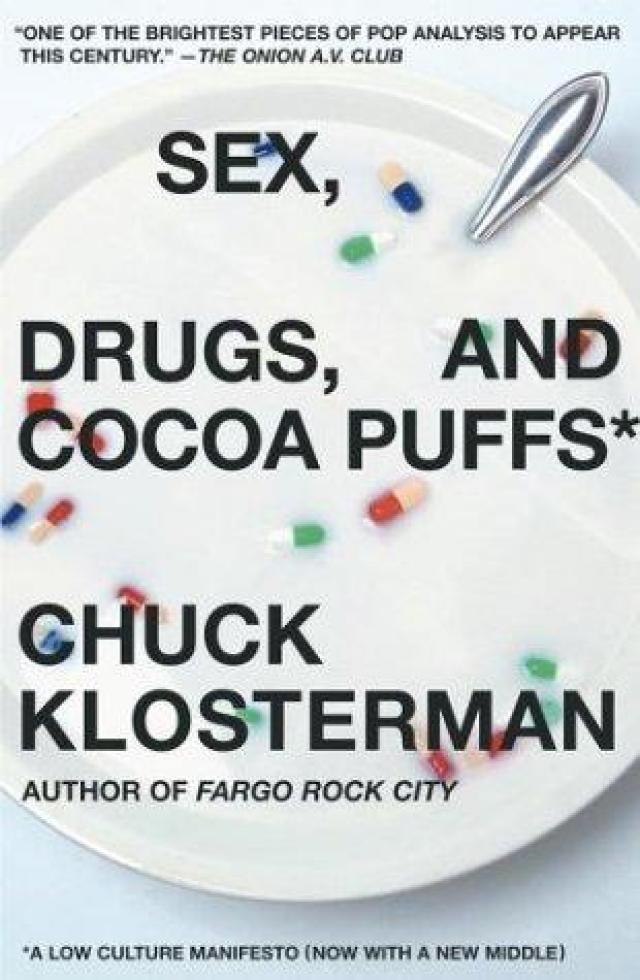
Sex, Drugs, and Cocoa Puffs: A Low Culture Manifesto

Sex, Drugs, and Cocoa Puffs: A Low Culture Manifesto

Chuck Klosterman

Nonfiction

Countless writers and artists have spoken for a generation, but no one has done it quite like Chuck Klosterman. With an exhaustive knowledge of popular culture and an almost effortless ability to spin brilliant prose out of unlikely subject matter, Klosterman attacks the entire spectrum of postmodern America: reality TV, Internet porn, Pamela Anderson, literary Jesus freaks, and the real difference between apples and oranges (of which there is none). And don't even get him started on his love life and the whole Harry-Met-Sally situation. Whether deconstructing Saved by the Bell episodes or the artistic legacy of Billy Joel, the symbolic importance of The Empire Strikes Back or the Celtics/Lakers rivalry, Chuck will make you think, he'll make you laugh, and he'll drive you insane -- usually all at once. Sex, Drugs, and Cocoa Puffs is ostensibly about art, entertainment, infotainment, sports, politics, and kittens, but -- really -- it's about us. All of us. As Klosterman realizes late at night, in the moment before he falls asleep, "In and of itself, nothing really matters. What matters is that nothing is ever 'in and of itself.'" Read to believe.
Read online
  • 596
Downtown Owl

Downtown Owl

Chuck Klosterman

Nonfiction

Somewhere in North Dakota, there is a town called Owl that isn't there. Disco is over, but punk never happened. They don't have cable. They don't really have pop culture, unless you count grain prices and alcoholism. People work hard and then they die. They hate the government and impregnate teenage girls. But that's not nearly as awful as it sounds; in fact, sometimes it's perfect. Mitch Hrlicka lives in Owl. He plays high school football and worries about his weirdness, or lack thereof. Julia Rabia just moved to Owl. She gets free booze and falls in love with a self-loathing bison farmer who listens to Goats Head Soup. Horace Jones has resided in Owl for seventy-three years. He consumes a lot of coffee, thinks about his dead wife, and understands the truth. They all know each other completely, except that they've never met. Like a colder, Reagan-era version of The Last Picture Show fused with Friday Night Lights, Chuck Klosterman's Downtown Owl is the unpretentious, darkly comedic story of how it feels to exist in a community where rural mythology and violent reality are pretty much the same thing. Loaded with detail and unified by a (very real) blizzard, it's technically about certain people in a certain place at a certain time...but it's really about a problem. And the problem is this: What does it mean to be a normal person? And there is no answer. But in Downtown Owl, what matters more is how you ask the question.
Read online
  • 569
Fargo Rock City: A Heavy Metal Odyssey in Rural North Dakota

Fargo Rock City: A Heavy Metal Odyssey in Rural North Dakota

Chuck Klosterman

Nonfiction

Empirically proving that -- no matter where you are -- kids wanna rock, this is Chuck Klosterman's hilarious memoir of growing up as a shameless metalhead in Wyndmere, North Dakotoa (population: 498). With a voice like Ace Frehley's guitar, Klosterman hacks his way through hair-band history, beginning with that fateful day in 1983 when his older brother brought home Mötley Crüe's Shout at the Devil. The fifth-grade Chuck wasn't quite ready to rock -- his hair was too short and his farm was too quiet -- but he still found a way to bang his nappy little head. Before the journey was over, he would slow-dance to Poison, sleep innocently beneath satanic pentagrams, lust for Lita Ford, and get ridiculously intellectual about Guns N' Roses. C'mon and feel his noize.
Read online
  • 539
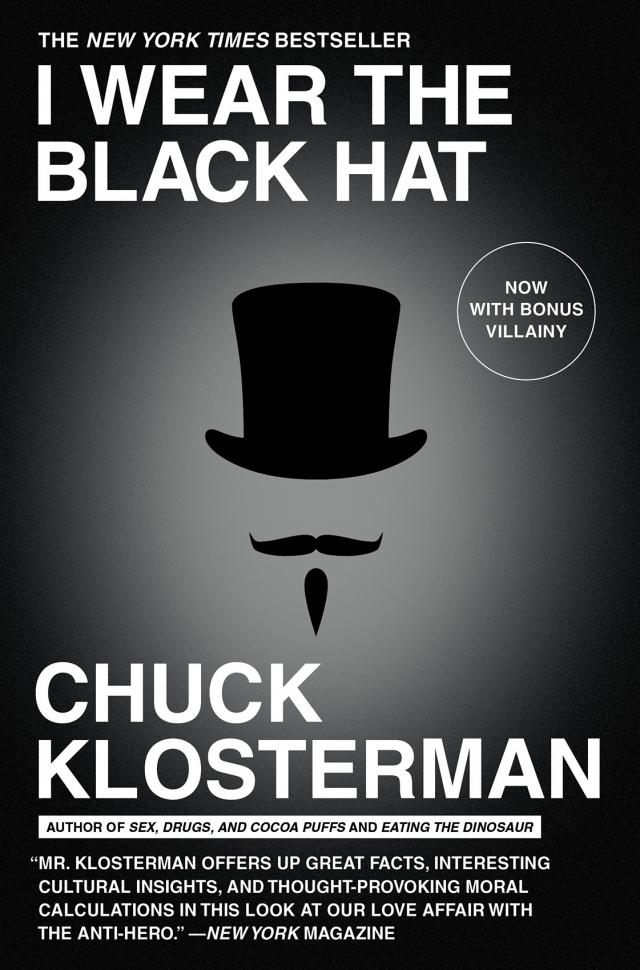
I Wear the Black Hat: Grappling With Villains (Real and Imagined)

I Wear the Black Hat: Grappling With Villains (Real and Imagined)

Chuck Klosterman

Nonfiction

From New York Times bestselling author, “one of America’s top cultural critics” (Entertainment Weekly), and “The Ethicist” for The New York Times Magazine, comes a new book of all original pieces on villains and villainy in popular culture.Chuck Klosterman has walked into the darkness. As a child, he rooted for conventionally good characters like wide-eyed Luke Skywalker in Star Wars. But as Klosterman aged, his alliances shifted—first to Han Solo and then to Darth Vader. Vader was a hero who consciously embraced evil; Vader wanted to be bad. But what, exactly, was that supposed to mean? When we classify someone as a bad person, what are we really saying (and why are we so obsessed with saying it)? In I Wear the Black Hat, Klosterman questions the very nature of how modern people understand the culture of villainy. What was so Machiavellian about Machiavelli? Why don’t we see Batman the same way we see Bernhard Goetz? Who’s more worthy of our vitriol—Bill Clinton or Don Henley? What was O.J. Simpson’s second-worst decision? And why is Klosterman still obsessed with some kid he knew for one week in 1985? Masterfully blending cultural analysis with self-interrogation and limitless imagination, I Wear the Black Hat delivers perceptive observations on the complexity of the anti-hero (seemingly the only kind of hero America still creates). I Wear the Black Hat is the rare example of serious criticism that’s instantly accessible and really, really funny. Klosterman is the only writer doing whatever it is he’s doing.
Read online
  • 369
But What if We're Wrong? Thinking About the Present as if It Were the Past

But What if We're Wrong? Thinking About the Present as if It Were the Past

Chuck Klosterman

Nonfiction

We live in a culture of casual certitude. This has always been the case, no matter how often that certainty has failed. Though no generation believes there’s nothing left to learn, every generation unconsciously assumes that what has already been defined and accepted is (probably) pretty close to how reality will be viewed in perpetuity. And then, of course, time passes. Ideas shift. Opinions invert. What once seemed reasonable eventually becomes absurd, replaced by modern perspectives that feel even more irrefutable and secure—until, of course, they don’t. But What If We’re Wrong? visualizes the contemporary world as it will appear to those who'll perceive it as the distant past. Chuck Klosterman asks questions that are profound in their simplicity: How certain are we about our understanding of gravity? How certain are we about our understanding of time? What will be the defining memory of rock music, five hundred years from today? How seriously should we view the content of our dreams? How seriously should we view the content of television? Are all sports destined for extinction? Is it possible that the greatest artist of our era is currently unknown (or—weirder still—widely known, but entirely disrespected)? Is it possible that we “overrate” democracy? And perhaps most disturbing, is it possible that we’ve reached the end of knowledge? Kinetically slingshotting through a broad spectrum of objective and subjective problems, But What If We’re Wrong? is built on interviews with a variety of creative thinkers—George Saunders, David Byrne, Jonathan Lethem, Kathryn Schulz, Neil deGrasse Tyson, Brian Greene, Junot Díaz, Amanda Petrusich, Ryan Adams, Nick Bostrom, Dan Carlin, and Richard Linklater, among others—interwoven with the type of high-wire humor and nontraditional analysis only Klosterman would dare to attempt. It’s a seemingly impossible achievement: a book about the things we cannot know, explained as if we did. It’s about how we live now, once “now” has become “then.”
Read online
  • 327
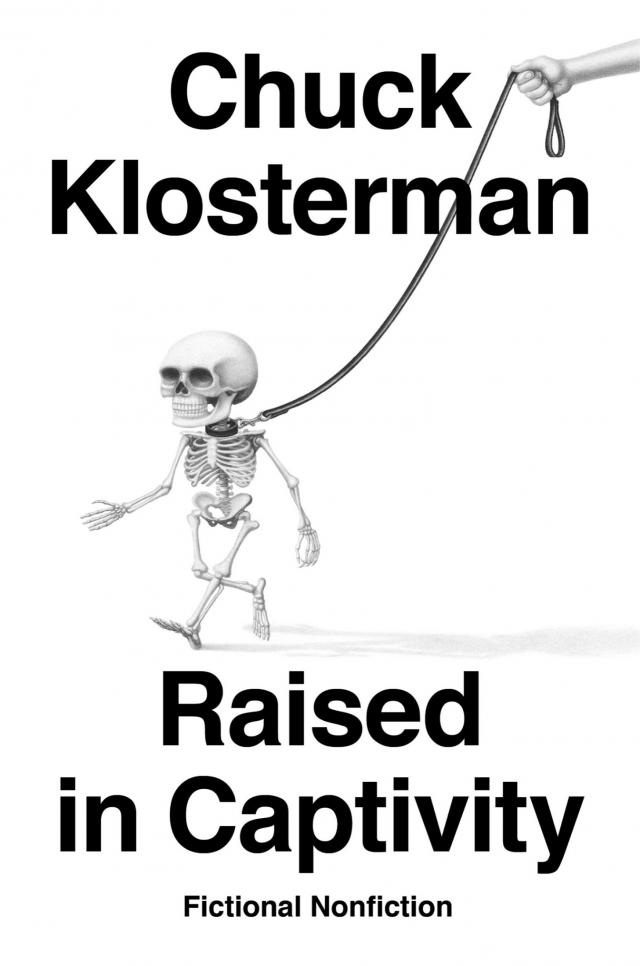
Raised in Captivity

Raised in Captivity

Chuck Klosterman

Nonfiction

Microdoses of the straight dope, stories so true they had to be wrapped in fiction for our own protection, from the best-selling author of But What if We're Wrong?A man flying first class discovers a puma in the lavatory. A new coach of a small-town Oklahoma high school football team installs an offense comprised of only one, very special, play. Four old friends are joined at their local bar by a stranger who seems to know everything about them. A man explains to the police why he told the employee of his local bodega that his colleague looked like the lead singer of Depeche Mode, a statement that may or may not have led in some way to a violent crime. A college professor discusses with his friend his difficulties with the new generation of students. An obscure power pop band wrestles with its new-found fame when its song "Blizzard of Summer" becomes an anthem for white supremacists. A couple considers getting a medical procedure that will transfer the pain of...
Read online
  • 259
Sex, Drugs, and Cocoa Puffs

Sex, Drugs, and Cocoa Puffs

Chuck Klosterman

Nonfiction

Amazon.com ReviewThere's quite a bit of intelligent analysis and thought-provoking insight packed into the pages of Chuck Klosterman's Sex, Drugs, and Cocoa Puffs, which is a little surprising considering how darn stupid most of Klosterman's subject matter actually is. Klosterman, one of the few members of the so-called "Generation X" to proudly embrace that label and the stereotypical image of disaffected slackers that often accompanies it, takes the reader on a witty and highly entertaining tour through portions of pop culture not usually subjected to analysis and presents his thoughts on Saved by the Bell, Billy Joel, amateur porn, MTV's The Real World, and much more. It would be easy in dealing with such subject matter to simply pile on some undergraduate level deconstruction, make a few jokes, and have yourself a clever little book. But Klosterman goes deeper than that, often employing his own life spent as a member of the lowbrow target demographic to measure the cultural impact of his subjects. While the book never quite lives up to the use of the word "manifesto" in the title (it's really more of a survey mixed with elements of memoir), there is much here to entertain and illuminate, particularly passages on the psychoses and motivations of breakfast cereal mascots, the difference between Celtic fans and Laker fans, and The Empire Strikes Back. Sections on a Guns n' Roses tribute band, The Sims, and soccer feel more like magazine pieces included to fill space than part of a cohesive whole. But when you're talking about a book based on a section of cultural history so reliant on a lack of attention span, even the incongruities feel somehow appropriate. --John MoeFrom Publishers WeeklyThere's a lot more cold cereal than sex or drugs in Klosterman's nostalgic, patchy collection of pop cultural essays, which, despite sparks of brilliance, fails to cohere. Having graduated from the University of North Dakota in 1994, Klosterman (Fargo Rock City) seems never to have left that time or place behind. He is an ironically self-aware, trivia-theorizing, unreconstructed slacker: "I'm a Gen Xer,' okay? And I buy shit marketed toGen Xers.' And I use air quotes when I talk.... Get over it." The essay topics speak for themselves: the Sims, The Real World, Say Anything, Pamela Anderson, Billy Joel, the Lakers/Celtics rivalry, etc. The closest Klosterman gets to the 21st century is Internet porn and the Dixie Chicks. This is a shame, because he's is a skilled prose stylist with a witty, twisted brain, a photo-perfect memory for entertainment trivia and has real chops as a memoirist. The book's best moments arrive when he eschews argumentation for personal history. In "George Will vs. Nick Hornby," a tired screed against soccer suddenly comes to life when Klosterman tells the story of how he was fired from his high school summer job as a Little League baseball coach. The mothers wanted their sons to have equal playing time; Klosterman wanted "a run-manufacturing offensive philosophy modeled after Whitey Herzog's St. Louis Cardinals." In a chapter on relationships, Klosterman semi-jokes that he only has "three and a half dates worth of material." Remove all the dated pop culture analyses, and Klosterman's book has enough material for about half a really great memoir.Copyright 2003 Reed Business Information, Inc.
Read online
  • 59
Fargo Rock City

Fargo Rock City

Chuck Klosterman

Nonfiction

Empirically proving that -- no matter where you are -- kids wanna rock, this is Chuck Klosterman's hilrious memoir of growing up as a shameless metalhead in Wyndmere, North Dakotoa (population: 498). With a voice like Ace Frehley's guitar, Klosterman hacks his way through hair-band history, beginning with that fateful day in 1983 when his older brother brought home Mötley Crüe's Shout at the Devil. The fifth-grade Chuck wasn't quite ready to rock -- his hair was too short and his farm was too quiet -- but he still found a way to bang his nappy little head. Before the journey was over, he would slow-dance to Poison, sleep innocently beneath satanic pentagrams, lust for Lita Ford, and get ridiculously intellectual about Guns N' Roses. C'mon and feel his noize.
Read online
  • 45
I Wear the Black Hat

I Wear the Black Hat

Chuck Klosterman

Nonfiction

One-of-a-kind cultural critic and New York Times bestselling author Chuck Klosterman “offers up great facts, interesting cultural insights, and thought-provoking moral calculations in this look at our love affair with the anti-hero” (New York magazine).Chuck Klosterman, “The Ethicist” for The New York Times Magazine, has walked into the darkness. In I Wear the Black Hat, he questions the modern understanding of villainy. When we classify someone as a bad person, what are we really saying, and why are we so obsessed with saying it? How does the culture of malevolence operate? What was so Machiavellian about Machiavelli? Why don’t we see Bernhard Goetz the same way we see Batman? Who is more worthy of our vitriol—Bill Clinton or Don Henley? What was O.J. Simpson’s second-worst decision? And why is Klosterman still haunted by some kid he knew for one week in 1985? Masterfully blending cultural...
Read online
  • 41
But What If We're Wrong?

But What If We're Wrong?

Chuck Klosterman

Nonfiction

We live in a culture of casual certitude. This has always been the case, no matter how often that certainty has failed. Though no generation believes there's nothing left to learn, every generation unconsciously assumes that what has already been defined and accepted is (probably) pretty close to how reality will be viewed in perpetuity. And then, of course, time passes. Ideas shift. Opinions invert. What once seemed reasonable eventually becomes absurd, replaced by modern perspectives that feel even more irrefutable and secure—until, of course, they don't. But What If We're Wrong? visualizes the contemporary world as it will appear to those who will conceive of it as the distant past. Chuck Klosterman asks questions that are profound in their simplicity: How certain are we about our understanding of gravity? How certain are we about our understanding of time? What will be the defining memory of rock music, five hundred years from today? How seriously should...
Read online
  • 15
183