

Toxic positivity, p.1
Toxic Positivity, page 1


Praise for Toxic Positivity
“I’ll be forever changed by Toxic Positivity—before offering words of validation, I will choose what I say wisely. Whitney Goodman’s book unlocks the difference between being helpful and harmful. This trailblazing book will help you transform your perspective about positivity.”
—Nedra Glover Tawwab, bestselling author of Set Boundaries, Find Peace
“Sorely needed . . . Whitney Goodman elegantly weaves together her personal and clinical experience, academic research, and practical advice to offer us a refreshing antidote to the seemingly innocuous but ultimately harmful message of ‘good vibes only.’”
—Iris McAlpin, trauma professional
“Whitney Goodman’s Toxic Positivity is a much-needed breath of fresh air in the self-help space. It’s the validation we’ve all been needing in order to fully understand the normal challenges that accompany our lives.”
—Todd Baratz, LMHC, psychotherapist
“Living an authentic life means facing hard times and growing through them, not pretending things are perfect when they’re not. This book provides a much-needed road map for being honest with ourselves and others in order to be truly present in our own lives and grow as a whole person.”
—Scott Barry Kaufman, PhD, host of The Psychology Podcast and author of Transcend
“Finally a book that explains exactly why ‘positivity at all costs’ backfires, and teaches us how to process our pain instead of pretending it doesn’t exist. Toxic Positivity is the antidote to superficial pop-psychology inspo, illustrating the limits of positive thoughts and gratitude, encouraging us to embrace life’s ups and downs, and giving us more realistic and helpful ways to implement ‘positivity.’ Funny isn’t, it? Stop chasing happiness and you may end up a little . . . happier.”
—Caroline Dooner, author of Tired as F*ck
“If you’ve ever felt like something is wrong with you because you’re having a hard time and can’t seem to ‘just get over it,’ this book will help you understand why. Moreover, Toxic Positivity teaches you what to do when witnessing the struggles of others—it will help you to be a better friend, parent, colleague, or partner when someone you love is having a difficult time. This book is the counterbalance to a world that preaches ‘look on the bright side’ whenever life gets tough.”
—Elizabeth Earnshaw, LMFT, relationship expert and author of I Want This to Work
TarcherPerigee
an imprint of Penguin Random House LLC
penguinrandomhouse.com
Copyright © 2022 Whitney Goodman
Penguin supports copyright. Copyright fuels creativity, encourages diverse voices, promotes free speech, and creates a vibrant culture. Thank you for buying an authorized edition of this book and for complying with copyright laws by not reproducing, scanning, or distributing any part of it in any form without permission. You are supporting writers and allowing Penguin to continue to publish books for every reader.
TarcherPerigee with tp colophon is a registered trademark of Penguin Random House LLC
Hardcover ISBN: 9780593418277
Ebook ISBN: 9780593418284
Cover design: Jess Morphew
Book design by Tiffany Estreicher, adapted for ebook by Estelle Malmed
Neither the publisher nor the author is engaged in rendering professional advice or services to the individual reader. The ideas, procedures, and suggestions contained in this book are not intended as a substitute for consulting with your physician. All matters regarding your health require medical supervision. Neither the author nor the publisher shall be liable or responsible for any loss or damage allegedly arising from any information or suggestion in this book.
pid_prh_6.0_139089994_c0_r0
For my husband.
In good times and bad times, I choose you.
Contents
Introduction: You Deserve More Than Just Good Vibes
Chapter one: What Is Toxic Positivity?
Chapter two: Why Positivity Doesn’t Always Work
Chapter three: When Positivity Doesn’t Help
Chapter Four: Stop Shaming Yourself
Chapter Five: How to Process an Emotion
Chapter Six: How to Complain Effectively
Chapter Seven: How to Support Someone
Chapter Eight: Discrimination with a Smile
Chapter Nine: How to Find Fulfillment in a Difficult World
Final Note: Reminders About Being Human
Acknowledgments
Recommended Reading
Notes
About the Author
Introduction
You Deserve More Than Just Good Vibes
I would bet there are three potential reasons why you picked up this book:
1. You’ve been impacted by toxic positivity and are sick of it.
2. You don’t know what toxic positivity is, but you’re intrigued.
3. You have no idea how positivity could possibly be toxic, and you’re determined to find out what absolute blasphemy I’m spewing in this book.
No matter what your reason is, I’m really glad you’re here.
Like many aspiring therapists, I got into the field for reasons I didn’t fully understand at the time. I knew I liked helping people, and I was obsessed with learning about their stories. But I would later discover (through the help of my therapist) that I actually wanted to get into the profession because I thought if I learned everything about relationships and the human psyche, I could fix everyone I loved and never feel pain again. Fellow therapists and future therapists, I know you get me here.
So I entered the field wide-eyed and delusional. I was closed off and hardened. I wanted my clients to be vulnerable without having to be so myself. I thought I would fix people, but no one needed fixing; they just needed to be heard and supported. I thought I would be the all-knowing speaker, but I’m the listener. I thought I would understand myself and the world, but now I have more questions. I thought I’d change everyone around me; instead, I learned the only person I could change was myself. My motivations for entering the field may have been a little off, but wow, I’m glad I’m here.
I love being a therapist, and I’ve always felt a little rough around the edges among my colleagues. I’ve never been a meditating, tea-drinking, yoga type of therapist. My voice is too loud, I don’t wear cardigans, and I hate all the “inspirational” quotes on the walls. I tried to make myself softer. I tried to get into the affirmations and all those interventions that tell you to “get in touch with your inner child and show it love.” I couldn’t do it. That’s how I’ve felt reading most of the self-help and psychology books out there. They all feel really soft and gentle. I want someone to tell it like it is and to be honest. I had a bit of an identity crisis as a new therapist, and it wasn’t until I started posting my thoughts on Instagram as @sitwithwhit that I realized there was value in how I wanted to show up.
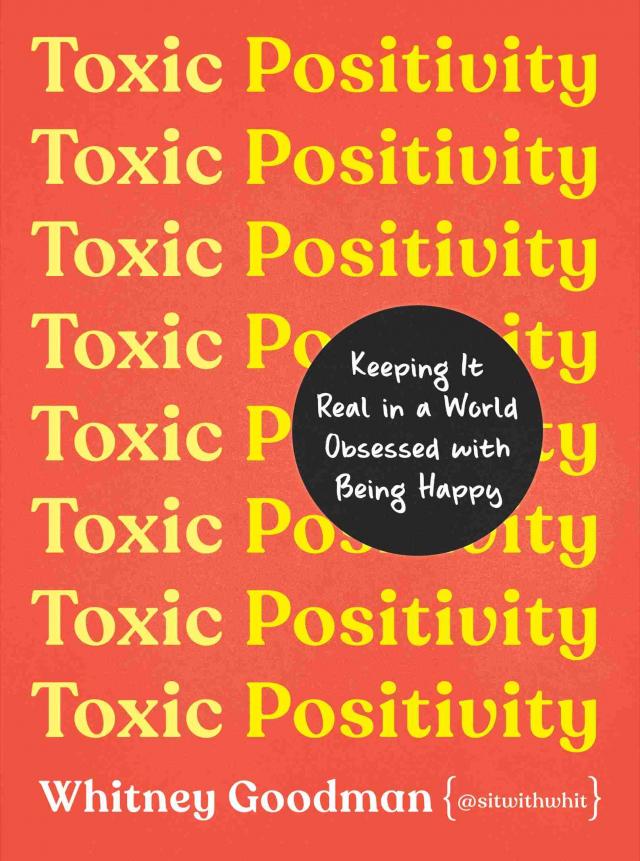
On February 1, 2019, I was scrolling on Pinterest and saw so many self-help and “inspirational” quotes being shared thousands of times. The bright colors and whimsical fonts made me irritated. I felt dismissed and concerned for anyone who might see these while in a fragile state. I started a Pinterest board of “happiness” and “inspirational” quotes that bothered me, and have continued collecting them over the years. (That board actually served as the inspiration for the cover of this book.) That same day, I shared one of my first charts on Instagram, listing some of those quotes from Pinterest, referring to them as “toxic positivity,” and providing some alternative statements that I thought offered more validation and hope. This was my first “viral” post, and my tiny following multiplied in the wake of sharing this chart. I was shocked by how many people agreed with my perspective and how the phrase toxic positivity resonated. It was also the first time I dealt with significant criticism and pushback online from people who disagreed with my perspective. I have continued creating toxic positivity posts on grief, racism, and other important topics over the last several years, and they are some of my most popular and controversial posts to date. I knew I was on to something but never could’ve imagined just how much this topic would resonate with others.
Toxic positivity is something that I have been aware of for a long time but didn’t have a name for. I saw it in my own home growing up, all over social media, at religious services, in school, and eventually as a therapist, with my clients. It was something that I noticed we were all contributing to, but behind closed doors everyone was telling me they hated it. I was doing it, too; it felt like I had to be a part of it or I would be considered “negative.” It had woven its way into my professional and personal life; once I noticed it, it was hard to look away.
I may have just noticed this phenomenon, but the truth is, it’s been around for centuries. Scholars, journalists, and researchers like Sara Ahmed, Audre Lorde, Barbara Ehrenreich, Gabriele Oettingen, and bell hooks have long been critical of the relentless pursuit of happiness and have eloquently uncovered its destructive nature throughout the world, especially within marginalized communities. Their works were instrumental in helping me understand how pervasive toxic positivity has become. Despite an abundance of research on the ineffectiveness of positivity in various situations, the self-help community continues to push positivity and the pursuit of happiness at every turn. I wanted to find a way to bring this research out of th e academic ivory tower and into the modern world.
My clients and my personal life are the true inspiration for this book and the reason it exists. This career has afforded me the privilege of sitting in a room with zero distractions and getting to know people on a profound level every single day. It’s an experience like no other, and it has taught me so much about life, the world, and human nature. Every single client has changed me in some way. I am eternally grateful for the humanity, struggle, and perseverance I have witnessed and continue to witness within those walls. I’ve taken different stories from my years as a therapist and combined them with research on positive thinking, emotions, relationships, and motivation to help you understand how positivity can become toxic and what to do instead. All identifying details have been changed to maintain the anonymity of my clients. I hope these stories will help you feel a little bit less alone and show you just how many other people are feeling the way you feel.
This is a book I’ve been writing on Instagram and in my office for years without knowing. It’s honest, authentic, and real. It’s a book for people who want to know how they can support themselves and others. It’s for people who are exhausted from pretending to be happy all the time—at work, at home, with their friends, and on social media. They’re tired of good vibes being forced on them at every turn and being told everything happens for a reason. I wrote this book for the people who haven’t been able to manifest the perfect life. I wrote it for the humans with too many feelings and too many thoughts. I wrote it for me, and I wrote it for you.
Happiness and positivity have become both a goal and an obligation. At every turn, we’re told that we need to be grateful or more positive. If something goes wrong in your life, it’s because you had a “bad attitude” or you “didn’t try hard enough.” I’m in awe of the ways toxic positivity has woven its way into so many aspects of our lives. We see it in the workplace, in our homes, and in our relationships. It’s also a powerful force that helps maintain sexism, racism, homophobia, transphobia, ableism, classism, and other types of prejudice. It really is everywhere.
I combed through everything we know about this history of positive thinking and the research on how we can do better and live better. I wanted this book to be easy to read and understand while also being extremely practical. Toxic Positivity is divided into nine chapters, and each chapter touches on a different client’s story and relationship with toxic positivity. If you’re interested in a comprehensive look at toxic positivity, how it impacts us, and what to do instead, I recommend reading the book cover to cover. For those of you who want to get down to the how-tos, feel free to skip to the chapters that speak to your specific need and experience.
Positive thinking has been packaged and sold as the cure to all our problems. From good vibes only bumper stickers to scroll after scroll of prettily designed Instagram affirmations to Life Is Good T-shirts and gurus promising you’re only one positive thought away from happiness, we are consistently told that “looking on the bright side” will help us avoid difficult experiences and feelings. This book might make you feel something other than joy or happiness or good vibes. It might shine a light on habits or phrases that have become part of your daily vernacular. It might make you uncomfortable. I hope it makes you think and reconsider all the ways that you may be suppressing your own emotions and needs in the name of happiness. I hope it makes you think about all the ways you’ve made yourself smaller or more palatable in pursuit of good vibes. I hope it helps you express your needs and develop relationships based on more than just a good time.
If this book allows you to make room in your life for the good, the bad, and the ugly, I’ve done my job.
Just Be Positive!
If it were that easy or effective, we’d all be doing it. Allow yourself to experience what it means to be a human—the good and the bad.
Chapter One
What Is Toxic Positivity?
Imagine that you just lost your job. You’re in full panic mode. Your mind is racing, and you have no idea what you’re going to do next.
You decide to share this with a friend. They glance your way and smile. It looks like they are keying up to tell you something big. Could this be the validation you need right now? Maybe they know of a great job opportunity? You watch them fidget as they pull from the depths of their inner wisdom and say, “At least you have all this time off now! It could be so much worse. Think about how much you’re going to learn from this.”
Toxic positivity has officially entered the building.
You freeze and think, Are they even listening to me? Am I seriously supposed to be grateful that I just lost my job?
You’re not sure where to go from here. You don’t feel grateful, so how in the world are you supposed to respond? You were already stressed out, and now this conversation leaves you feeling totally misunderstood. So, you put aside your feelings and say, “Yeah, thanks.”
Now you’re not only jobless, but you also feel distant from your friend and ashamed that you can’t just look on the bright side.
They’re Just Trying to Help
Listen, this person probably has good intentions. What they said isn’t false—you WILL have more time off now, and of course things could (always) be worse, and yes, you’ll likely learn some lessons from the experience.
The problem is, you’re not there yet. You’re still worried and upset. You’re scared. Your body and mind are in full crisis mode, and no platitude is going to change that. What you really need is support and space to sort through your feelings.
Toxic positivity is the advice we might technically want to integrate but are incapable of synthesizing at the moment. Instead, it typically leaves us feeling silenced, judged, and misunderstood.
Sound familiar?
But Isn’t Positivity Always a Good Thing?
You’ve probably experienced hundreds of interactions like this. You might be wondering: How can positivity possibly be toxic? That’s a pretty strong word. Is it really that bad?
Honestly, positivity is such an integral part of our culture that it feels scary to challenge it. As I continue to research and write about positive thinking, I’m constantly worried about coming across as “negative” while discussing this topic. Every time I try to push back against the good vibes only culture, there are inevitably those people who are angry, shocked, and confused. Comments and messages flood my in-box: “How could positivity be toxic?! You’ve officially lost your mind.”
I get it. It’s a testament to our total devotion to positivity culture. We’ve been told that it’s the key to happiness—and doctors, therapists, and leaders prescribe it regularly. It makes sense that you might question anyone who tells you otherwise. But behind closed doors, my clients, friends, and family have been telling me for years how much they despise the constant pressure to put a positive spin on everything. They’re feeling disconnected from their peers who tell them “It’ll all be OK” and to “Look on the bright side.” They know this isn’t working, and they’re desperate for another way.
So before we get started, let’s clear something up: positivity isn’t all bad.
When used correctly, it’s great. Experts agree that positive feelings like gratitude, contentment, optimism, and self-confidence can lengthen our lives and improve our health. Many of these claims are exaggerated, but there is value in positive thinking. People who report having more positive feelings are more likely to have a rich social life, to be more active, and to engage in more health-promoting behaviors. I think we can all agree that it is healthy to feel “positive” when it comes from a genuine place.
But somewhere along the way, we constructed this idea that being a “positive person” means you’re a robot who has to see the good in literally everything. We force positivity on ourselves because society tells us to, and anything less is a personal failure. Negativity is seen as the enemy, and we chastise ourselves and the people around us when they succumb to it. If you’re not positive, you’re simply not trying hard enough. If you’re not positive, you’re a drag to be around.






