

Ava, p.17
Ava, page 17
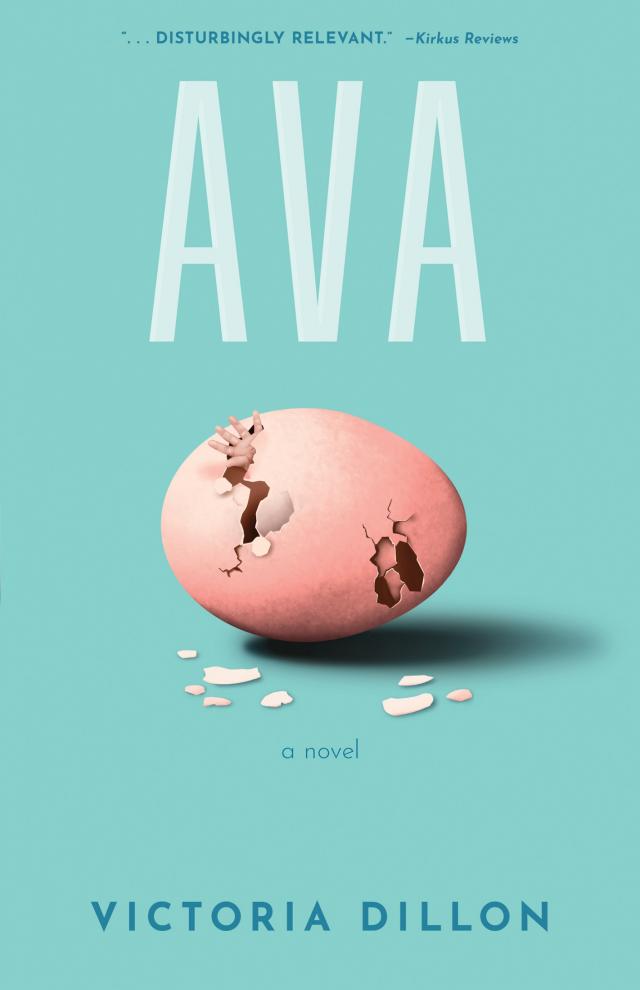


“So, egg laying still has inherent risks?”
“Yes. It’s not perfect, but it’s a vast improvement to traditional pregnancy and childbirth, in my opinion.”
“And what about abortion, Dr. Davis? What do you envision that will look like in the future if more women agree to be guinea pigs—or, rather, guinea hens?”
“Very clever,” he replied with a smile. “Well, my hope is that it would be unnecessary. With proper eye protection, there would be no unplanned fertilizations.”
“But what if there were? What then?”
“Well, if the egg isn’t incubated, it simply won’t grow. Or, if a woman chooses adoption, someone else could incubate her egg and the baby could be adopted. But my hope is that ophthalmologists will develop specialized contacts to help prevent any unplanned events. A good pair of sunglasses currently filters 75 to 90 percent of orange and red light, but I would prefer glasses and contacts that provide 100 percent protection to be safe.”
“And what do you say to critics who say you are playing God, Dr. Davis?”
“I’d say God gave us knowledge for medical advances to improve the quality of life and save lives. And that is my intent—to save lives, not to play God.”
CHAPTER 29
The Farm to Table in St. Louis seats about 80–100 guests, I believe. Their omelets are absolutely divine. Planning to go next Tuesday first thing when they open!
I think the same family has a place in Atlanta that seats at least 120. May go Friday. Very excited.
Sitting in her home office, Larkin used her laptop to read coded comments in the social media group Aubrey had created: Ob-Gyns for Farm to Table Fandom. Using Aubrey’s account to keep her own identity anonymous, Larkin replied to them by saying Sounds like fun or Will have to check it out.
While Dr. Davis was at the meeting, Aubrey and Larkin had moved the thousands of injections he’d prepared and stored in his lab to a storage unit near Aubrey’s home. After Dr. Davis appeared on the national news, Aubrey had spread the word to colleagues who’d had enough of their hands being tied by the courts making medical decisions for pregnant women. They joined the social media site if any of their patients were interested in getting the injection and mentioned the desired quantity on the Fandom page, along with the city where the injections should be delivered. The underground group transported the injections and met at shuttered Planned Parenthood buildings in various cities for distribution using an operation similar to the one they already used to distribute black-market birth control.
The shot was untested and unvetted, but women clamored for the opportunity to change their future children’s lives. They didn’t foresee any governmental changes or constitutional protections in the near future. They had only seen decades of increasing restrictions and a government that had successfully dominated through gerrymandering, voter suppression, and Supreme Court nominations. They’d tried peaceful protesting and they’d tried getting out the vote, but nothing had changed. Now they had hope.
Larkin was jotting down quantities and cities when Ava came in.
“Mom?”
“Yeah, honey?” Larkin replied and turned around in her chair.
“Can I talk to you?”
“Of course. What’s up?”
Ava said down on the ottoman across from Larkin.
“I saw a clip of Dr. Davis’s interview. Is anyone going to find out who I am?”
“No. I promise. Your name hasn’t been associated with anything. No one will know. We’ll protect your identity.”
“But don’t they have my DNA now? Those other scientists took samples of my egg. Aren’t there databases? Like when people want to find their ancestors? Can’t they just plug it in and figure out who I am?” Ava’s voice shook as she spoke. “Will we go to jail? Or will they lock me up in a lab cage somewhere?”
Sensing Ava’s distress, Larkin tried to calm her. She said, “Ava, the scientists aren’t interested in revealing your identity. They only want to verify that this is possible . . . that women can lay eggs. No one wants to ‘out’ you. This is purely science.”
“They might not want to, but other people might. They would want to put the freak on trial or try an exorcism or something.”
“Please don’t worry,” Larkin begged her daughter.
“Don’t worry? The President of the United States called me an abomination, Mom.” Ava stood and started pacing the room. “And an affront to God. Lots of people agree with him. They want to know who I am. We just learned about the Salem Witch Trials in school. It’s scaring me.”
“I promise I won’t let anything happen to you.” Larkin stood and reached her hand out to Ava.
Larkin watched as Ava’s face turned red with anger and she refused to take her mother’s hand. “Do you even hear what you’re saying, Mom? You already let something happen to me. All of this is because you let something happen to me.” Ava pointed to her mother and then herself for emphasis as she spoke. “I’m now scared because of the decision you made for me. My life has changed because of your decision, not mine.” Ava stepped over to Larkin’s desk. “And now you’re helping other moms do this to their kids?” Ava gestured to the laptop. “I don’t think Maeve was the only one whose brain didn’t develop,” Ava muttered and regarded her mother.
Larkin was taken aback by her daughter’s callous comment. She recognized the fear and hurt on Ava’s face, the same face she’d instantly fallen in love with when Ava was born. Larkin had felt a surge of endorphins wash over her at the moment of her daughter’s birth. It had felt like the closest thing she could imagine to pure happiness. In that moment, she had felt a love for Ava that was so strong it hurt her heart, and she would do anything to protect her.
“Oh, God, Ava. I understand why you’re upset.” Larkin remained still, afraid Ava would leave before she was able to explain. “I am so sorry. I promise, I did this for you. To help you. To not have to go through what I did with Maeve.” Ava started to walk out of the office, but Larkin implored, “Ava, please, please listen.”
Ava stopped in the doorway with her back turned to her mother.
Larkin continued. “When I learned Maeve had no chance of living and I was told I couldn’t have an abortion, every day leading up to her birth was mentally torturous. I didn’t think I could handle knowing she was growing inside me every day, only to be forced to watch her die.” Ava remained facing the door as Larkin added, “And I was right. I didn’t handle it well at all. I didn’t understand why it was so important to other people for Maeve to die when they decided it was acceptable for her to die.” She stopped and cleared her throat. “I wanted to die with her rather than experience pregnancy and childbirth. I never told your dad, but every single day before she was born, I thought of how I could kill myself as some sort of apology to her because I failed her.” Larkin stammered as she recounted the memory. “First, I thought my body failed somehow by not giving her a brain, and then I thought I was failing to give her what I truly felt was a less tragic end to her life.” Larkin watched as Ava lowered her head down and her posture softened.
“And then Dr. Davis told me about his work. I wanted this for you, and he wanted it for me and more women. And I agreed. I am so very sorry. I didn’t think about how it would truly impact you, but I promise, I did this to protect you and others from experiencing what I did.”
Ava turned around and embraced Larkin so hard that Larkin could barely breathe. Larkin felt the familiar rush of endorphins again.
“I didn’t know you wanted to die, Mom. I’m so glad you’re here. I didn’t know how awful it was. I’m so, so sorry that happened to you. And I’m so sorry about Maeve, and what I said. I’m just so scared.” Ava buried her face in Larkin’s shoulder and sobbed.
“My sweet Avacado,” Larkin murmured into Ava’s hair as she gently rubbed her daughter’s back. “I’ll do everything I can to keep you anonymous. And you won’t be alone in this forever. As we keep distributing these injections, there are going to be a lot more just like you someday.”
CHAPTER 30
September 9, 2058
AP News
Federal government denounces “the Hen Party.” Vows to shut down further research.
Dr. Davis returned to work after a frenetic week of television, magazine, and podcast interviews. Susan stopped him in the hallway as he walked toward the lab. She began frantically apologizing for what was happening. He walked into the room, where Larkin and two graduate students watched from a corner while authorities from the Food and Drug Administration unplugged hard drives and went through filing cabinets. Susan told him there were more of them in his office. The investigators didn’t speak as they gathered information and boxed items to be taken away.
Dr. Davis welcomed them and sat down with his colleagues. He asked if the agents would like any coffee or snacks but received no response. He decided to get himself a cup of coffee and went up to his office, where the other FDA workers were.
“If I may be of assistance, I believe this would be of interest to you,” he said, handing a ledger to one of the investigators. It contained detailed financial information showing how the money from his trust had been spent to fund his research. Every dollar was accounted for in the ledger, and he still had funds left over thanks to wise investments. He assured them that none of the research money he’d received from the federal government had been used for the Hen Project, as the media had nicknamed it. The government referred to those involved as the Hen Party, which amused Dr. Davis. It made it sound as if they were their own political organization, and it felt like a proper uprising to him. It was some of that good trouble his father had wanted.
“You are more than welcome to any of the information here,” he said. “And please feel free to ask me any questions you may have.”
Again, he received no response.
Dr. Davis knew the investigation would provide very little information other than what he had given them. He had been careful over the years to take notes using only paper and pen, and he’d shredded them when he was done with one phase and moved on to the next. There were no floppy disks from when he’d started the project, nor was any newer research stored in the cloud. The conversations he’d had with colleagues over the years had been conducted via landline only, and he’d never emailed anyone with follow-up questions. He’d been very careful to protect the identities of Aubrey, Larkin, Jameson, and Ava. And he told them Susan’s only involvement had been helping to transport the egg to the meeting.
However, anyone who wanted to reproduce the final elements of his work was free to do so. At the conference, he’d provided the attendees with key information about his research, enabling the injections to be produced and duplicated on a massive scale. He’d also made the information available online. He wasn’t exactly sure what more the investigators would want, but he let them rummage freely.
Dr. Davis sipped his coffee as he watched box after box being carried out of his office. Then he walked down to the lab, apologized for the chaos, and told the graduate students to go home. The FDA had left, and Larkin and Susan were cleaning and reorganizing. He could tell they both had been crying.
“Why the tears?” he asked. “It doesn’t look too bad in here.” He set down his mug and started moving the lab chairs back into place.
“We don’t want you to get arrested and spend the rest of your life in jail,” Susan replied with a tearstained face.
“Now, there’s no need to worry about me. I’ve already lived the best of my life, and there’s probably not too much left of the rest of my life, right? Ten years? Maybe twenty?” he said with a wide grin and outstretched arms. He put his hands on his hips and thought out loud. “Spencer is an actuary. I should ask him to estimate what life in prison would mean for a seventy-year-old man such as myself. My dad lived until ninety-two . . .”
As Larkin regarded her beloved mentor, she shook her head with bewilderment. Then she wiped her eyes and went back to putting the lab back in order.
He picked up his coffee and sat down to enjoy it, nonplussed.
Ultimately, Dr. Davis didn’t serve any jail time. The FDA hadn’t been able to complete its investigation because it couldn’t determine the identities of the volunteer or Exhibit 1. Dr. Davis didn’t even receive a fine since there was no law against privately funded germline human genome editing. After reviewing the financial records, the FDA confirmed that he had only used his own money. However, he was banned from receiving any further government research funding secondary to “ethical misconduct.” He apologized to Susan and Larkin for having to shut down his lab.
They would not accept his apology. Susan was of retirement age, and she decided to spend her time fostering cats and kittens. Her husband was fully on board—he had accepted long ago that he would always be surrounded by cats. And Larkin told Dr. Davis this was a great time for her to go back to college and pursue a graduate degree.
Despite no longer having his own laboratory, Dr. Davis stayed busy fielding calls from other researchers. A pharmaceutical lab in Canada began mass-producing the injections and planned to begin recruiting volunteers to perform appropriate clinical trials if their governing research agencies gave approval. Researchers were surprised by the amount of interest Canadian women showed in participating and who wanted to volunteer despite having access to contraception and abortion.
As Canadian scientists waited for approval to start their trials, demand for the injections in the United States continued. To prepare for the next generation of daughters, Dr. Davis began meeting with leaders in ophthalmology, engineering, and obstetrics.
In about ten or so years, there would be a demand for better eye protection to prevent unplanned ovulation in pubescent girls whose mothers had received the treatment. He also spoke to engineers about developing incubators for the eggs based on a design he’d made using the incubator in his lab as a prototype. It needed to have temperature and humidity control, turn the egg several times a day, and be sold at an affordable price. Finally, it needed a digital monitor that would attach to the egg and keep track of the growing baby’s heart rate and movements, like those already available for chicken eggs.
Dr. Davis met with multiple obstetricians about their role in monitoring and assisting with the births. These professionals had no experience with this new type of delivery and were unsure how to monitor the embryo’s growth and development. The obstetricians and midwives who’d be assisting with the deliveries would need specialized training, and they would have to learn in the moment.
He reassured them that they could monitor growth with ultrasounds by drilling a fenestration through the large part of the egg, filling the air cell with sterile saline, and placing the ultrasound transducer in this area. When the yolk was completely absorbed and the fetus occupied the entire egg, it would be time for delivery. He reassured them that the reduction of maternal and perinatal complications would be well worth the learning curve.
The government instituted a swift response to Dr. Davis’s research. The current President of the United States, who had been Jack Montogomery’s vice president, issued an executive order banning further human genome editing using germline cells (the cells that form eggs in females and sperm in males). His original plan of banning all human gene editing was met with opposition from his own party, as this would have halted advances in almost all aspects of medicine, including oncology, autoimmune disorders, and infectious diseases.
Then, all anyone could do was wait. Wait for Exhibit 1, now referred to simply as X1, to reveal herself, and wait to see if she would produce more eggs. Media interest slowly waned over the years when no new news developed. Chat room theorists concluded that she wasn’t real and anyone who still believed she existed was foolish. Some theorized that X1 had died of complications from the untested genetic manipulation. There was further speculation that Dr. Davis was simply a shill for women’s activists, he was just trying to make a point, and X1 had never existed.
CHAPTER 31
When Ava and Graham graduated from high school, the days of seeing each other almost daily ended abruptly, and they left for college in different cities a few months later. When she completed college, Ava started teaching at an elementary school in her hometown. She heard from her parents that Graham and several of his friends were opening a pub in town. She also learned that Graham had earned a degree in brewing science while studying in North Carolina and he would be the pub’s master brewer.
She and a group of coworkers decided to check out the new local brewery on opening night. She sat with her friends at a corner table, and she recognized Graham immediately. He was busy delivering beer flights to customers and answering their questions about the brewing process, the alcohol content by volume for each of the beers, and where he’d learned his craft. He also discussed their selection of pilsners, ales, IPAs, and lagers.
When he came to Ava’s table, her friends each ordered a flight of the lighter beers. But Ava preferred the darker beers and asked about the selection of porters and stouts. Graham’s eyes lit up when he saw her.
“Ava! My old locker buddy! How the hell are you?” He leaned in to give her a hug.
“Great! So good to see you, and congratulations on your business! I know you’re slammed right now. Maybe we can catch up later.”
“That’d be great!”
Ava enjoyed listening to his calm, deep voice as he described each of the beverage selections in detail to everyone at the table, noting their differences. At the end of the night, after some malted barley and hops catalyzed her courage, she asked Graham out for a date, and he enthusiastically said yes.
Their first date was an early morning hike at a local state park. Towering tulip poplars shaded their path. As they talked, they realized how little they knew about each other despite their daily high school interactions. She was now a third-grade teacher who loved her job, and her students loved her energy. He’d originally wanted to teach chemistry but realized he could unite his love of chemistry and beer to form a career. Ava learned that he had two brothers and a sister. Then he asked Ava if she had siblings. She told him about Maeve and how she had died ten years before Ava was born.






