

Once upon a midnight dre.., p.1
Once Upon a Midnight Dreary, page 1


Contents
Author’s Note:
Content Warning!
Chapter 1
Chapter 2
Chapter 3
Chapter 4
Chapter 5
Chapter 6
Chapter 7
Chapter 8
Chapter 9
Chapter 10
Chapter 11
Chapter 12
Chapter 13
Chapter 14
Chapter 15
Chapter 16
Chapter 17
Chapter 18
Chapter 19
Chapter 20
Chapter 21
Chapter 22
Chapter 23
Chapter 24
Chapter 25
Chapter 26
Chapter 27
Chapter 28
The End…
Are you certain you wish to do this?
Later…
Copyright © 2025 Cora Raven
All rights reserved. No part of this publication may be reproduced, distributed, or transmitted in any form or by any means, including photocopying, recording, or other electronic or mechanical methods, without the prior written permission of the publisher, except in the case of brief quotations embodied in critical reviews and certain other noncommercial uses permitted by copyright law.
Any references to historical events, real people, or real places are used fictitiously. Names, characters, and places are products of the author’s imagination.
Front cover image by Cora Raven
Book design by Cora Raven
Printed in the United States of America.
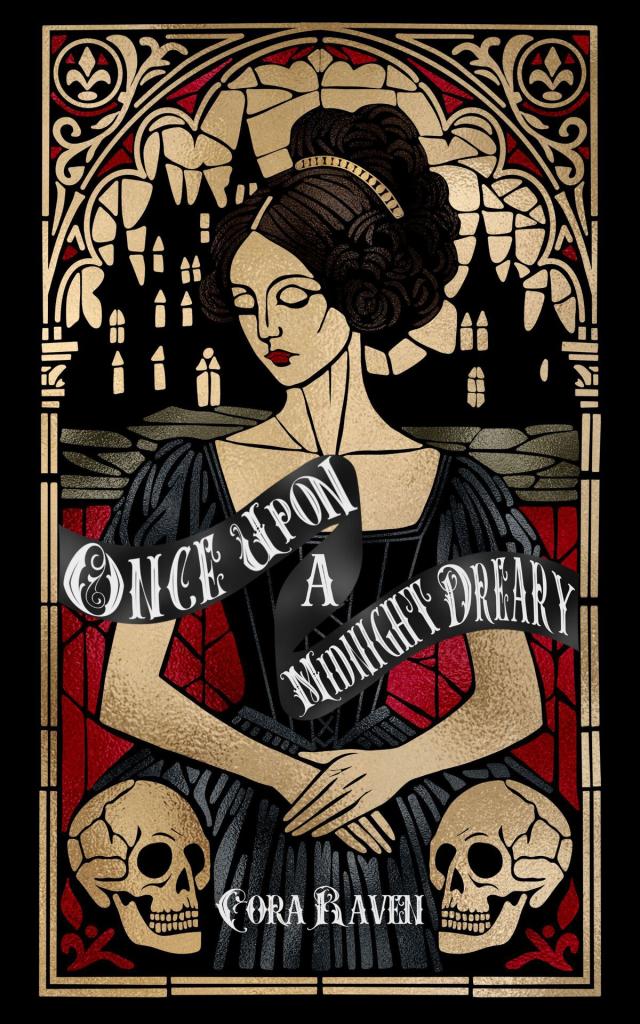
Once Upon A
Midnight Dreary
Cora Raven
Author’s Note:
This novel is a work of historical gothic fiction, set in an era when understandings of mental health bore little resemblance to the compassionate, research-based approaches we value today. The Victorian period was a time marked by misdiagnosis, superstition, and profound misunderstanding of the human mind. Treatments could be harsh, misguided, or outright harmful. Asylums often served as places of confinement rather than healing. Women, in particular, were vulnerable to being labeled “mad” for behaviors that today would be recognized as trauma responses, grief, neurodivergence, or simple nonconformity.
In crafting this story, I aimed to depict mental health as it would have been understood in that time—not as an endorsement of those views, but as a reflection of the dark, atmospheric world in which the FMC’s tale unfolds. The narrative explores themes of paranoia, identity, implied Schizophrenia, delusions, etc. and the fragile line between perception and reality.
It is my hope that readers will engage with these themes with an understanding of their historical context and that this book does not reflect modern practices or my beliefs about mental health, but rather the constraints, prejudices, and haunting uncertainties of a bygone age.
Thank you for entering this shadowed world with an open heart and a thoughtful mind. Please take care of your mental health.
—Cora Raven
Content Warning!
This novel contains themes, scenes, and imagery that may be distressing to some readers. Please take care of your mental health.
● Gaslighting
● Manipulation
● Emotional abuse
● Paranoia/Delusions
● Fear of insanity/mental instability
● Implied Schizophrenia
● Implied Personality disorder
● Sedation, injections, and drugging
● Medical confinement
● Mention of mental illnesses/suicide
● Physical violence
● Death (non-graphic and graphic)
● Blood and gore
● Themes of murder, attempted murder
● Poisoning themes, involuntary sedation
● Gothic house, spirits, evil inhabitants
● Claustrophobic tunnels
● Graphic open door spice scenes (Consensual adults)
Once upon a Midnight Dreary, while I pondered weak and weary…
-Edgar Allan Poe
Dearest reader,
If this account ever finds its way into your hands, I ask only one thing of you before you continue.
Do not decide too quickly that I am insane.
Madness is an easy verdict and society has always found it convenient—particularly when a woman speaks too much, remembers too well, or dares to insist upon her own version of events. It is far simpler to say she imagined it all than inquire why so many appeared invested in convincing her of just that.
I write this not as a confession, nor even as a plea, but as a record. These pages are not meant to defend me. They are meant to unburden me from the terror I endured.
You must understand, before I began this tale, that my mind was not always fractured. I was not born delicate, hysterical, or prone to fantasy. If I have become so, it was not without careful encouragement.
I was raised beneath the long shadow of a woman the world decided was broken long ago.
My mother was once beautiful, brilliant, witty, and married well. Society adored her—until they didn’t. She loved me fiercely, desperately even, but there were moments throughout my childhood when she would seize my wrists with trembling fingers and stare at me with terror clouding her eyes, whispering about the evil trapped in her child.
They took her from me when I was eleven.
I remember the night vividly, though I have been told that memories are treacherous things. Children embellish and grief distorts.
But one does not easily forget terror.
If I close my eyes, I can still feel her fingers digging into my arm as she dragged me from my bed. I recall the smell of her floral perfume and the stickiness of her sweat-drenched skin. I remember the way my voice broke when I screamed for my father and I can still see the glint of the knife in her hand as she raised it above my head.
But mostly, I remember the pain.
By the time my father and the servants pried her away, the gash across my cheek had already begun to bleed down my throat. The scar it left remains still—pale, jagged, and merciless—an ever-present reminder of the moment my mother went mad.
As they dragged her away, she twisted back toward me, her eyes wild, her mouth twitching as she whispered, “I only wanted to cut away the evil from her.”
There were moments, later in life, when I found myself wondering if perhaps my mother was not entirely wrong about the evil that lived within me. Whether perhaps she had seen something in me that others did not.
Was it possible that she had not been entirely wrong about the darkness that lives within all of us?
Or perhaps it was simply a nagging seed of fear that took root in my conscience and grew quietly over the years.
Regardless, as I grew older, I noticed how quickly concern turned to discomfort when my name was spoken. Invitations to balls and soirees quietly stopped arriving. Conversations faltered when I entered a room. Eyes would linger just a bit too long on my scar before sliding away with polite horror. I learned that poverty was not my greatest shame. Poverty, when accompanied by a titled father, could be forgiven, overlooked, even pitied. Madness, it would seem, could not.
And yet, I wanted what all women are encouraged to crave. Marriage, security, and of course, respectability.
If you have been told that I sought attention, you have been misinformed. I sought only for survival after my father passed away.
What followed—my marriage, the manor, the staff, the whispers, the dreams, the shadows in the halls—I am told cannot possibly have happened. That no one conspired to break me. That what I saw in that manor were figments of my overactive imagination born of trauma, grief, and one too many morbid books.
Perhaps.
But before you decide how this ends, I ask you only one small thing: Will you read this as the diary of a woman unraveling? Or will you allow for the possibility that perhaps unraveling is sometimes done to us?
I will not promise clarity, only honesty as I experienced it. Whether that proves sufficient is no longer within my control.
So if, after reading what follows, you choose to believe that madness was solely my undoing, I will not fault you. It would be far easier than accepting the alternative.
I set these words down not to beg for sympathy or absolution, but simply to be heard. Whether you trust me or not is a decision only you can make. I can only tell you what I saw. What I felt. What I endured.
As Edgar Allan Poe, himself, once said: “That which you mistake for madness is but an over-accuteness of the senses.” Then again, he also said: “This story is told through the eyes of a madman, who, like all of us, believed he was sane.”
I suppose I’ll let you decide which is true.
And so I begin.
My name is Lucy Deveroux, Duchess of Blackthorn, and this is the story of how I came to be haunted—not by the dead—but perhaps by my own mind.
Chapter 1
London 1889
I’ll begin this tale with two truths and a lie, for I learned years ago that deception is easiest to swallow when offered alongside something pretty.
So here are mine.
First: I was desperately, indecently poor.
The kind of poor that crept in quietly, soft-footed and patient, through the cracks of a once respectable home. It began with a single unpaid bill, then another, until I awoke one morning a nd realized that I owned more debt than dresses, more grief than coal for the fire. The kind of poor that leaves a woman choosing between dignity and a decent meal.
Poverty, it would seem, when settled upon a household of good breeding, is a peculiar, humiliating thing.
It hadn’t always been that way though.
My father, once a respectable Viscount, was dead.
There were days in my childhood when laughter lived in the halls of our home, but grief is a slow poison. Somewhere between losing my mother to the asylum and watching his only daughter be shunned from his peers, he’d lost his battle with drinking and gambled away the fortune he once held dear.
By the time the last creditor came knocking, I had sold everything of value. I had grown accustomed to stitching my own hems by candlelight and learned to ignore the sharpness of my cheekbones from hunger.
Only my name remained…but even that was beginning to rot.
Second: I had once been in love with the Duke of Blackthorn.
Sylum Deveroux had loved me too—or at least I thought he had. He had seen past my scar, past the legacy of madness staining my bloodline, and for a moment in time, he had made me believe that I was worth more than hushed gossip.
But, love is a fragile thing in the hands of aristocracy, especially when you are nothing more than a penniless, mad woman’s daughter with nothing to offer a husband.
Duty wrenched him from me before I even understood what I’d lost. A well-chosen bride with a substantial dowry tore him from me without so much as a farewell.
He vanished from my life and reemerged only in gossip and headlines, his name spoken with both awe and scandal.
His betrothed never did make it down the aisle. The eve of their wedding ended in a funeral instead.
Most people believed Elizabeth had fallen from the balcony at Blackthorn Manor by accident. Or slipped. Or jumped… or she was pushed. It depended on who told the story and how much they’d had to drink. In the end, gossip doesn’t need truth to thrive and even a Duke can be tarnished with a single whispered accusation.
Sylum had disappeared from London after that, never to be seen or heard from again and I’d lost the only person I’d ever truly loved.
As for the lie?
I was attending the Samhain masquerade ball merely for amusement.
I told myself that lie as I stood hidden beyond the lantern glow, breath fogging in the cold October air, trembling fingers fisting in the silk skirts of a gown three seasons out of fashion.
I told myself that slipping into a Countess’ ball uninvited beneath a handmade mask was merely an adventure.
But the truth—the real truth—pressed against my ribs like a second heartbeat.
I was there because I needed to find a husband.
Marriage was my only respectable escape from ruin. A masquerade was the ideal hunting ground for a woman who possessed neither wealth nor reputation… only desperation artfully disguised as daring. In such a place, one could lie without consequence, flirt without expectation, and tempt without inviting scandal.
Masks softened flaws and hid scars. Silk disguised poverty. And in the dark, no one cared where a woman came from. They cared only whether she could make them laugh, make them want.
Still, doubt anchored my feet to the stones.
From inside the manor, music thundered. Laughter flared, bright and reckless. Wealth moved easily behind those doors, breathing champagne and indulgence. I had not breathed that air in some time.
All I had to do was step inside.
All I had to do was make someone fall in love before he knew the truth… that I was Lucy Benette, disfigured daughter of a disgraced viscount and the woman who’d gone mad enough to nearly kill her own child.
My pulse beat wildly as I adjusted my mask—cheap paste gems instead of diamonds, but convincing enough in the candlelight.
I inhaled once, sharp and shallow, crossing the courtyard like a thief in the night.
I just needed to slip inside unnoticed.
That truth pulsed louder than the violins, louder than the laughter spilling from painted mouths and flushed throats. Invitations were checked at the door. Names were announced with ringing authority and titles unfurled like banners. I hovered at the edge of the entrance, heart frantic, as I watched perfumed women glide past on the arms of men who had never once known hunger a day in their lives.
I timed it carefully.
A Marquess arrived late, red faced and bellowing at his wife in tones so public and indelicate that one would think he wanted the entire county to know their grievances. Their quarrel sent a ripple of delighted horror through the crowd as guests surged forward like crows to a carcass, desperate for a single ounce of fresh gossip.
The commotion crested, the butler raising his voice in a futile attempt to announce them properly. In that small, miraculous lapse of order, I took my chance.
I slipped through the crowd.
No name. No title. No invitation.
Just nervous desperation and the borrowed anonymity of a mask pressed cool against my feverish skin.
The stale air inside hit me all at once. Far too many pressed bodies, champagne and wax from a hundred candles dripping gold down crystal chandeliers large enough to crush a person outright. The music throbbed through the marble floor, up into my bones, until I felt it more than heard it.
Laughter curled around me, sharp and slightly cruel. Everywhere I looked there was movement—skirts spinning, hands grasping, bodies leaning far too close in the half-approved intimacy of a masquerade.
I kept my head down at first, heart hammering loud enough to drown the strings of music. I was terrified that someone… anyone… might recognize me. It was foolish to be here. Reckless. Dangerous.
I knew these people. I had grown up among them. I knew the tilt of familiar shoulders, recognized the cadence of their voices. I was aware of the way their heads tilted when gossip ripened on their tongues. I had once moved in their circles. I had once been just like them… and a single recognition would destroy me.
So I did what any sensible sinner would do when amongst saints.
I went straight for the champagne.
The refreshment table gleamed at the edge of the room, crowded with half-empty glasses and sugared fruits glistening like jewels. I seized a flute of champagne with perhaps too much eagerness and drank deeply, welcoming the burn as it slid down my throat.
One glass did nothing.
The second steadied my hands.
By the third, the room began to soften at the edges, like a cruel painting smudged just enough to make the subject bearable.
I exhaled, my shoulders loosening as I dared to lift my gaze. No one had stopped me. No one had reached for my arm or demanded my name. Masks hid everything. Most importantly, past sins. Tonight, wealth and desperation looked remarkably similar beneath the gilt and velvet.
I wasn’t trembling anymore and that was a good start.
Encouraged, I let myself wander.
The masquerade was not a single room but spilled into many. Doors opened to alcoves thick with shadows and hushed conversations, balconies where couples tempted scandal, gaming tables where gold passed hands with careless abandon. Cards shuffled stiffly. Dice clattered like teeth.
Gilded masks adorned the pillars, their hollow eyes catching the light as though something sentient watched through them. From the gallery above, a string quartet played a slow, haunting melody that trembled at the edge of something unholy—beautiful, yes, but just off-key enough to raise the hairs on one’s neck.
Guests drifted through the candlelight in a dizzying blur of color and perfume. Silk and satin whispered against marble floors, laughter chimed like distant echoes, and every face was half-concealed, half-revealed. Beauty and monstrosity blurred until I could no longer tell which was which.
As I threaded through the crowd, a gentleman in a fox mask caught my hand. He bowed so deeply that his feathered ears brushed my skirts before he rose to place a gentle kiss on my gloved knuckles.
“May I have this dance?”
I hesitated a moment, gauging him, praying I wouldn’t recognize the curve of his jaw or the timbre of his voice.
Thankfully, I didn’t.
I said yes before fear could catch up, the champagne singing through my veins and giving me courage I wouldn’t normally possess.






